From grand Safavid landmarks and historic mosques to elegant bridges, traditional bazaars, and peaceful gardens, Isfahan offers a rich collection of cultural and architectural treasures.
Naqsh-e Jahan Square: At the heart of Isfahan lies Naqsh-e Jahan Square, one of the most remarkable examples of urban design from the Safavid era. Commissioned by Shah Abbas I in the early 17th century, this magnificent square became the centre of the royal capital and is now recognised as a UNESCO World Heritage Site.
Elegant two-storey arcades and four outstanding architectural landmarks surround the rectangular square, each occupying one of its sides. The Shah Mosque stands at the southern end, Sheikh Lotfollah Mosque faces it from the east, Ali Qapu Palace rises along the western side, and the impressive Qeysarieh Portal marks the entrance to the Grand Bazaar in the north. Together, these monuments reflect Isfahan’s religious, royal, and commercial life during the Safavid period.
In the past, the square was much more than an architectural centre. It hosted royal ceremonies, public celebrations, polo matches, and lively markets, bringing together different aspects of city life. Today, visitors can admire its remarkable architecture, explore the traditional shops beneath the surrounding arcades, and enjoy the atmosphere of one of Iran’s most celebrated historic landmarks.
Shah Mosque (Royal Mosque): Standing at the southern end of Naqsh-e Jahan Square, Shah Mosque is one of the finest examples of Safavid architecture in Iran. Commissioned by Shah Abbas I in 1611, the mosque was designed to serve as a major religious centre for the newly established Safavid capital. Its monumental entrance, crowned by two elegant minarets, creates an impressive approach to the complex.
Inside, the mosque reveals a remarkable harmony of space, colour, and decoration. Its grand dome, four minarets, spacious courtyard, and four iwans are adorned with intricate tilework in shades of turquoise, blue, and other vibrant colours. One of its most interesting architectural features is the carefully angled connection between the entrance and the main prayer hall, allowing the building to face Mecca while remaining aligned with the square.
Today, Shah Mosque forms an essential part of the historic ensemble of Naqsh-e Jahan Square, a UNESCO World Heritage Site. Beyond its impressive scale and decoration, it offers visitors a glimpse into the artistic achievements and religious life of Isfahan during the Safavid period.
Ali Qapu Palace: Located on the western side of Naqsh-e Jahan Square, Ali Qapu Palace was an important gateway to the royal quarters of Safavid Isfahan. Originally built in the late 16th century, the structure was gradually expanded during the reign of Shah Abbas I and his successors, becoming a remarkable palace for royal receptions and court ceremonies.
One of its most striking features is the elevated wooden terrace, known as the Talar, supported by eighteen slender columns. From this open pavilion, the Safavid rulers and their guests could watch polo matches, celebrations, and other events taking place in the square below. The terrace also offers a wonderful view of the surrounding architectural ensemble.
Inside the palace, several floors reveal a rich collection of decorative details, including wall paintings, intricate stucco work, and elegant architectural spaces. The upper Music Hall is particularly distinctive, with delicate stucco niches shaped like vases and vessels, designed to create interesting acoustic effects. Together, these features make Ali Qapu an outstanding example of the artistic and ceremonial architecture of the Safavid court.
Sheikh Lotfollah Mosque: Situated on the eastern side of Naqsh-e Jahan Square, Sheikh Lotfollah Mosque is one of the most refined architectural achievements of the Safavid era. Commissioned by Shah Abbas I, its construction began in the early 17th century and was completed in 1619. Unlike the larger Royal Mosque on the opposite side of the square, this smaller mosque was built primarily for the use of the royal court.
The mosque is especially admired for its magnificent dome, covered in intricate turquoise, cream, and blue tilework. As daylight changes, the colours and patterns appear to shift, giving the dome a different character throughout the day. Its entrance portal is equally impressive, decorated with elaborate mosaic tiles and finely detailed calligraphy.
Inside, visitors can admire the elegant prayer chamber, where delicate patterns, carefully arranged light, and graceful architectural forms create a remarkable sense of harmony. The building has no minarets or central courtyard, making its design quite distinctive among the major Safavid mosques of Isfahan. Today, it remains one of the most memorable landmarks of Naqsh-e Jahan Square and an outstanding expression of Persian artistic craftsmanship.
Isfahan’s Historic Bazaar: Although parts of the Grand Bazaar predate the Safavid era, it expanded significantly as Isfahan developed into the empire’s capital in the early 17th century. Trade and craftsmanship flourished during this period, shaping the bazaar into one of the city’s most important commercial centres.
The entrance to the bazaar from Naqsh-e Jahan Square is marked by the impressive Qeysarieh Portal, a richly decorated gateway that once served as a ceremonial entrance to the royal market. Beyond it, a network of covered passages unfolds beneath traditional brick vaults and domes, with small openings that allow natural light to filter into the interior. Along the way, visitors encounter historic caravanserais, traditional workshops, and shops offering carpets, textiles, metalwork, miniature paintings, and other local crafts.
More than a place for shopping, the Grand Bazaar remains a living part of Isfahan’s cultural heritage. Walking through its winding lanes offers a chance to observe traditional trades, meet local artisans, and experience the atmosphere of a historic marketplace that has connected commerce, craftsmanship, and everyday life for generations.
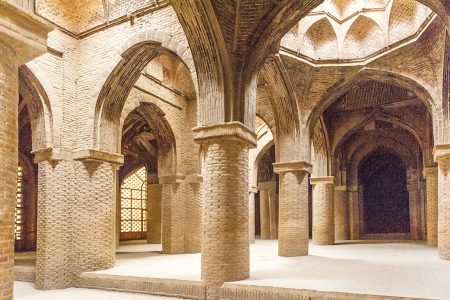
Jameh Mosque: Located in the historic heart of Isfahan, Jameh Mosque is one of the most significant monuments of Islamic architecture in Iran. Often described as a living museum of architectural styles, the mosque reflects more than twelve centuries of construction, restoration, and artistic development. Its earliest surviving sections date back to the 9th century, while major transformations during the Seljuk period gave the complex much of its distinctive character.
The mosque is best known for its spacious courtyard, surrounded by four magnificent iwans, each opening towards a different side of the complex. This four-iwan arrangement became an influential model for mosque architecture across the Islamic world. The building also features two remarkable domed chambers, intricate brickwork, decorative tilework, and prayer halls that reveal the architectural styles of successive historical periods.
Unlike many historic monuments that belong to a single era, Jameh Mosque brings together the artistic achievements of several dynasties, including the Seljuks, Ilkhanids, Timurids, and Safavids. Recognised as a UNESCO World Heritage Site in 2012, it offers visitors a unique opportunity to trace the evolution of Iranian Islamic architecture within a single remarkable complex.
Vank Cathedral: Located in the historic Armenian quarter of New Julfa, Vank Cathedral, also known as the Holy Savior Cathedral, is one of the most remarkable cultural landmarks in Isfahan. Its history is closely connected to the arrival of Armenian communities in the city during the reign of Shah Abbas I in the early 17th century. Construction of the cathedral began in 1606, and the building took its present form through later developments, particularly between 1655 and 1664.
The cathedral is especially fascinating for the contrast between its exterior and interior. Its simple brick façade and distinctive dome conceal a richly decorated interior filled with vivid biblical murals, gilded details, and intricate tilework. The paintings depict scenes from the life of Jesus and other biblical stories, reflecting a distinctive artistic tradition shaped by Armenian heritage and influences from Persian and European art.
The cathedral complex also includes a museum and other historic buildings that preserve important documents, manuscripts, religious objects, and artefacts related to the history of Armenians in Iran. A visit to Vank offers more than an opportunity to admire a historic church; it provides a glimpse into the cultural exchange and enduring traditions of Isfahan’s Armenian community.
Chehel Sotun Palace: Set within a historic Persian garden near the centre of Isfahan, Chehel Sotun Palace is one of the finest examples of Safavid garden architecture. Its development began during the reign of Shah Abbas I, while Shah Abbas II expanded the pavilion and completed the palace in 1647. It was designed as a royal reception venue where the ruler could welcome foreign ambassadors, host important guests, and hold formal gatherings.
The palace is best known for its elegant columned terrace, supported by twenty slender wooden columns. Their reflection in the long pool in front of the building creates the impression of forty columns, giving the palace its name, which means “Forty Columns” in Persian. The terrace connects the palace with its surrounding garden, creating a graceful setting where architecture, water, and greenery come together.
Inside, the grand reception hall is particularly impressive for its large historical wall paintings depicting royal ceremonies, diplomatic encounters, and important battles from different periods of Iranian history. Delicate decorative details, colourful paintings, and mirrorwork add to the richness of the interior. Today, Chehel Sotoun offers visitors a fascinating glimpse into Safavid court life and the Persian tradition of designing gardens as an integral part of royal architecture.
Khaju Bridge: Spanning the Zayandeh Rud River in eastern Isfahan, Khaju Bridge is one of the finest examples of Safavid engineering and architecture. Built around 1650 during the reign of Shah Abbas II, the bridge was designed not only to connect the two riverbanks but also to regulate the flow of water and provide a setting for public gatherings and royal entertainment.
Constructed from stone and brick, the bridge features two levels of arched walkways, a series of water channels, and a distinctive central pavilion. Its carefully designed sluice gates once allowed water levels to be controlled, helping direct the river flow for irrigation and other purposes. The combination of stepped waterways, vaulted passages, and elegant arches gives the structure a remarkable visual character.
Beyond its practical functions, Khaju Bridge became an important social space in the city. Its shaded passages and riverside terraces offered places for people to walk, rest, and enjoy the surroundings. The central pavilion was also associated with royal gatherings and celebrations during the Safavid period. Even when the riverbed is dry, the bridge remains an impressive landmark, admired for its architectural details and its close connection with the history of Isfahan.
Isfahan Music Museum: Located in the historic Jolfa neighbourhood, Isfahan Music Museum offers visitors a fascinating introduction to the musical traditions of Iran. Established in 2015, this private museum was created by two Iranian musicians with the aim of preserving and presenting the country’s rich musical heritage.
The museum houses a collection of more than 300 traditional instruments from different regions of Iran. Its exhibition halls introduce visitors to both classical Persian instruments, such as the tar, setar, kamancheh, and santur, and a variety of regional and folk instruments. Audio-visual presentations help explain how these instruments are played and the distinctive sounds they produce, making the collection accessible even to visitors unfamiliar with Iranian music.
Beyond its exhibition halls, the museum features a workshop where visitors can learn about the traditional craftsmanship involved in making musical instruments, as well as a section dedicated to prominent Iranian musicians and performers. Live performances of traditional Persian music may also be part of the visit, offering an opportunity to experience the sounds of the instruments in a more intimate setting. For travellers interested in art and culture, the museum provides a memorable way to discover another dimension of Iran’s artistic heritage.
Si-o-Se Pol: Stretching across the Zayandeh Rud River, Si-o-Se Pol is one of the most recognizable landmarks of Isfahan and a remarkable example of Safavid bridge architecture. Also known as the Allahverdi Khan Bridge, it was built between 1602 and 1607 during the reign of Shah Abbas I, under the supervision of his trusted commander, Allahverdi Khan. The bridge formed an important part of the historic Chahar Bagh avenue, connecting different parts of the expanding Safavid capital.
The name Si-o-Se Pol means “Bridge of Thirty-Three Arches” in Persian, referring to the series of arches along its structure. Built from brick and stone, the bridge extends for approximately 300 metres and features two levels of walkways. Its lower passages and upper pedestrian paths were designed to accommodate different kinds of movement, while the smaller vaulted spaces along the sides provided sheltered places to pause and enjoy views of the river.
Beyond its practical role, Si-o-Se Pol became an important gathering place for the people of Isfahan. Its long arcades, rhythmic arches, and graceful proportions make it especially impressive at sunset and after dark, when the bridge is illuminated. Although the amount of water in the Zayandeh Rud varies throughout the year, Si-o-Se Pol remains an enduring symbol of the city’s architectural heritage and its Safavid past.