The Armenian Monastic Ensembles of Iran: Located across the East and West Azerbaijan provinces in northwestern Iran, the Armenian Monastic Ensembles of Iran comprise three historic sites of Armenian Christian heritage: the Monastery of St Thaddeus near Chaldoran, the Monastery of St Stepanos near Jolfa, and the Chapel of Dzordzor near Maku. The ensemble was inscribed on the UNESCO World Heritage List in 2008.
Dating from different historical periods, these religious buildings represent outstanding examples of Armenian architectural and decorative traditions. The oldest, St Thaddeus Monastery, dates back to the 7th century. Their architecture and ornamentation reflect centuries of cultural exchange between Armenian, Byzantine, Orthodox, and Persian traditions.
The monasteries remain important places of pilgrimage and living testimonies to Armenian religious heritage. Particularly noteworthy is the Chapel of Dzordzor, which was carefully relocated and reconstructed to preserve it during the construction of a nearby dam. Together, these monuments offer visitors a remarkable insight into the history, architecture, and enduring cultural traditions of Armenian communities in northwestern Iran.
Tabriz Historic Bazaar Complex: Located in the heart of Tabriz, the Historic Bazaar Complex is one of the most important commercial and cultural centres along the historic east-west trade routes, including the Silk Road. Its interconnected network of covered brick passageways, vaulted halls, caravanserais, mosques, madrasas, and bathhouses reflects the many commercial, religious, educational, and social functions of traditional Iranian bazaars.
The bazaar flourished over several centuries and was already well known as an important trading centre by the 13th century. Much of its present architectural fabric reflects reconstruction following the devastating earthquake of 1780. Its distinctive domed halls, traditional brick vaults, and specialised market sections illustrate the architectural and commercial traditions of historic Tabriz.
Inscribed on the UNESCO World Heritage List in 2010, the complex is recognised as one of the most complete examples of Iran’s traditional commercial and cultural system. It remains an active marketplace today, where historic architecture and everyday commercial life continue side by side.
Faculty of Architecture and Urbanism, Tabriz Islamic Art University: The Faculty of Architecture and Urbanism at Tabriz Islamic Art University occupies a distinctive complex of historic residential buildings in the heart of Tabriz. The site brings together three traditional houses, known as Ghadaki, Ganjeizadeh, and Behnam, which date back approximately 150 to 200 years.
Rather than demolishing these valuable buildings to construct a new campus, the university chose to restore and adapt them for educational use. Their traditional courtyards, arched openings, decorative details, and carefully designed living spaces have been preserved as part of the architectural character of the complex. The connecting courtyards now form a unified educational environment.
This adaptive reuse project offers an interesting example of how historic Persian residential architecture can be preserved and given a new purpose. It is particularly noteworthy for architecture enthusiasts interested in traditional Iranian houses and the relationship between architectural heritage and contemporary education.
The Blue Mosque of Tabriz: The Blue Mosque of Tabriz, also known as Kabud Mosque or Masjed-e Mozaffariya, is one of the city’s most remarkable historical monuments. Built during the reign of Jahan Shah of the Qara Qoyunlu dynasty, the mosque was completed in 1465 and formed part of a larger architectural complex established under the patronage of his wife, Khatun Jan Begom.
The mosque is particularly renowned for its exquisite blue and turquoise mosaic tilework, intricate geometric patterns, and decorative calligraphy. Its richly ornamented entrance portal and interior surfaces reflect the outstanding artistic and architectural achievements of 15th-century Tabriz. The sophisticated combination of glazed tiles, brickwork, and decorative inscriptions gives the monument its distinctive character.
Over the centuries, earthquakes, neglect, and the loss of many decorative elements caused extensive damage to the structure. Restoration work during the 20th century helped rebuild parts of the mosque, including its domes and missing walls, while recovering elements of its remarkable architectural appearance.
Today, the Blue Mosque remains an important symbol of Tabriz’s historical heritage and one of Iran’s finest surviving examples of Qara Qoyunlu architecture.
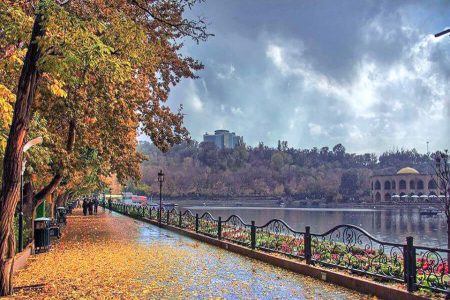
Elgoli Garden: Located in southeastern Tabriz, Elgoli Garden, formerly known as Shahgoli, is one of the city’s most popular historic recreational areas. The complex centres around a large artificial lake, surrounded by landscaped gardens, tree-lined pathways, and a distinctive pavilion standing on an island in the middle of the water.
Although the early history of the lake is not fully documented, it appears to have served as a water reservoir for gardens around Tabriz before being developed as a royal summer retreat during the Qajar period. A pavilion was built on the island for the Qajar crown prince, and the surrounding grounds were landscaped with trees, flowerbeds, and pathways. The present two-storey pavilion is a later reconstruction of the original building.
Opened as a public park in the 1930s, Elgoli has gradually become one of Tabriz’s best-known leisure destinations. Today, its lake, central pavilion, and green surroundings provide a pleasant setting for walking, relaxation, and enjoying the city’s outdoor atmosphere.
Tabriz St. Mary Church: Saint Mary Church of Tabriz, also known as the Holy Mother of God Church or Surp Mariam Asdvadzadzin, is an important Armenian Apostolic landmark in the historic Dik Bashi district. An earlier church stood on this site as early as the 12th century, reflecting the long-standing presence of the Armenian Christian community in Tabriz. The present building was constructed between 1782 and 1785, following the devastating earthquake of 1780 that destroyed much of the city.
The church is widely regarded as the oldest and largest Armenian church in Tabriz. Its architectural design follows a traditional cruciform plan, with a central dome supported by four substantial pillars. Built mainly of stone and brick, the structure also features arched openings and religious paintings that reflect the artistic traditions of Armenian church architecture.
Next to the church stands the Melik-Tangian Armenian Museum, which preserves objects associated with the history and cultural heritage of the Armenian community in the region. Together, the church and museum offer visitors an opportunity to discover an important part of Tabriz’s religious history and its diverse cultural identity.
The Qajar Museum (Amir Nezam House): It is housed in the historic Amir Nezam Garousi House and is one of Tabriz’s finest examples of Qajar-era residential architecture. Located in the historic Sheshghelan district, the mansion was built during the reign of Naser al-Din Shah Qajar and commissioned by Amir Nezam Garousi, a prominent statesman of the period.
The two-storey residence features two courtyards, a spacious veranda supported by sixteen columns, colourful stained-glass windows, and intricate stucco decorations. One of its most attractive architectural features is the basement pool hall, traditionally known as a howz-khaneh, which reflects the design of affluent Iranian houses during the Qajar period.
After extensive restoration, the building opened as the Qajar Museum in 2006. Its exhibition halls display a diverse collection of historical objects, including coins, textiles, ceramics, glassware, metalwork, musical instruments, weapons, and traditional decorative arts. Together, the mansion’s architecture and museum collections offer visitors an opportunity to explore the artistic, social, and cultural heritage of Iran during the Qajar era.
The Mausoleum of Poets: Located in Tabriz’s historic Sorkhab district, the Mausoleum of Poets stands on the site of an old cemetery that has long been associated with the city’s literary and cultural heritage. The burial ground is traditionally linked to more than 400 poets, writers, and mystics, including renowned Persian literary figures such as Asadi Tusi, Qatran Tabrizi, Khaqani Shirvani, Homam Tabrizi, and the contemporary poet Mohammad-Hossein Shahriar.
The present memorial was designed by architect Gholamreza Farzanmehr, whose proposal was selected in an architectural competition held in 1971. Its striking modern structure, characterised by intersecting arches and vaults, creates a distinctive architectural tribute to the literary figures commemorated at the site. Shahriar was buried here in 1988, further strengthening the mausoleum’s significance as a cultural landmark.
Today, the Mausoleum of Poets is one of Tabriz’s most recognisable landmarks, offering visitors an opportunity to discover the city’s rich literary heritage and its lasting contribution to Persian poetry.
The Tabriz Constitution House: Located in the Rasteh Koocheh district, west of Tabriz’s Historic Bazaar, the Constitution House is one of the city’s most important historical landmarks associated with the Iranian Constitutional Revolution of the early 20th century. Built in 1868, this two-storey Qajar-era residence later belonged to Haj Mehdi Koozekonani, a prominent merchant and supporter of the constitutional movement.
During the revolution, Koozekonani placed his house at the disposal of constitutionalists, making it an important meeting place for political activists and revolutionary leaders. During the eleven-month siege of Tabriz, prominent figures such as Sattar Khan and Bagher Khan gathered here to discuss and coordinate their activities. The house therefore played a significant role in the city’s struggle for constitutional government.
The building is also notable for its traditional Qajar architecture, featuring colourful orosi windows, carved wooden doors, decorative woodwork, and elegant interior spaces. Today, it houses the Constitution Museum, where visitors can explore historical photographs, documents, personal belongings, weapons, and other objects associated with the Constitutional Revolution.
A visit to the Constitution House offers a valuable insight into Tabriz’s role in one of the most important political movements in modern Iranian history.
Azerbaijan Museum: Located next to the Blue Mosque in the historic centre of Tabriz, the Azerbaijan Museum is one of the most important archaeological museums in northwestern Iran. Its purpose-built structure was designed by French archaeologist and architect André Godard, with the architectural plans drawn by Ismail Dibaj. The museum officially opened in 1962.
Its collections cover a wide range of historical periods, from prehistoric times and the pre-Islamic era to the Islamic period. Visitors can explore archaeological discoveries and historical objects, including ancient pottery, metalwork, coins, seals, and stone artefacts from different parts of Iran.
The museum also displays historical sculptures, inscriptions, and other stone works, offering a broader perspective on the archaeological and cultural heritage of Iran. Together, its diverse collections make it an important destination for visitors interested in the history of Tabriz and the wider northwestern region.
The Tabriz Jameh Mosque: Located next to the Blue Mosque in the historic centre of Tabriz, the Azerbaijan Museum is one of the most important archaeological museums in northwestern Iran. Its purpose-built structure was designed by French archaeologist and architect André Godard, with the architectural plans drawn by Ismail Dibaj. The museum officially opened in 1962.
Its collections cover a wide range of historical periods, from prehistoric times and the pre-Islamic era to the Islamic period. Visitors can explore archaeological discoveries and historical objects, including ancient pottery, metalwork, coins, seals, and stone artefacts from different parts of Iran.
The museum also displays historical sculptures, inscriptions, and other stone works, offering a broader perspective on the archaeological and cultural heritage of Iran. Together, its diverse collections make it an important destination for visitors interested in the history of Tabriz and the wider northwestern region.
Kandovan Village: Located in Osku County, East Azerbaijan Province, approximately 62 kilometres from Tabriz, Kandovan is a remarkable historic village known for its distinctive rock-cut architecture. The settlement is built among naturally formed, cone-shaped rock structures created from volcanic deposits on the slopes of the Sahand Mountains. Over time, weathering and erosion shaped these formations, which local inhabitants gradually carved out to create homes and other living spaces.
The cone-shaped formations, locally known as karans, contain rooms arranged across different levels. In addition to residential spaces, some were used as stables, storage areas, and workshops. The origins of the village’s rock-cut settlement are generally associated with the Ilkhanid period, around the 14th century.
Unlike many historic rock-cut settlements that have been abandoned, Kandovan remains a living village where residents continue to maintain their homes and traditional way of life. Its unusual architecture, shaped by both natural processes and generations of human craftsmanship, makes it one of the most distinctive cultural attractions in northwestern Iran.
Tabriz Municipality Museum (Saat Tower): Located in Saat Square, the Tabriz Municipality Building, also known as Saat Tower or the Municipality Palace, is one of the city’s most recognisable architectural landmarks. Constructed between 1935 and 1939 under the supervision of German engineers, the building reflects European architectural influences combined with local materials and craftsmanship. Its most distinctive feature is a prominent clock tower, approximately 30 metres high, with clock faces visible from all four sides.
The building continues to serve as the headquarters of Tabriz Municipality, while its basement houses the Municipality Museum, which opened in 2007. The museum has featured several exhibition halls dedicated to the history of the city and its municipal administration, including collections of traditional carpets, historic cameras, documents, musical instruments, calligraphy, and contemporary art.
Together, the historic building, its distinctive clock tower, and the museum offer visitors an opportunity to discover both the architectural heritage and the civic history of Tabriz.
Tabriz Museum of Measurement: Located in the historic Maqsoodiyeh district, near Saat Square, the Tabriz Museum of Measurement, also known as the Sanjesh Museum, is housed in Salmasi House, a traditional residence dating from the mid-Qajar period. Once the family home of the Salmasi household, the two-storey mansion is notable for its central courtyard, traditional brickwork, colourful stained-glass windows, and decorative plasterwork.
After restoration, the historic house was adapted to accommodate a specialised collection of traditional and antique measuring instruments. The museum displays a variety of objects used to measure time, weight, and other quantities, including antique clocks, balances, scales, weights, and measuring vessels. Its collection also features scientific instruments associated with astronomy, meteorology, and geology, including traditional astronomical devices such as astrolabes.
The combination of the historic mansion and its specialised collection offers visitors an interesting perspective on the development of measurement tools and scientific knowledge, while also providing an opportunity to appreciate the traditional residential architecture of Qajar-era Tabriz.
Tabriz St. Sarkis Church: Located in the historic Lilava district, on Baron Avak Alley, Saint Sarkis Church is an important landmark of Tabriz’s Armenian heritage. Built during the Qajar period in 1821, the church was renovated in 1845 by Armenian residents of Tabriz who had originally come from Azerbaijan.
The church is distinguished by its traditional Armenian architectural design and cruciform layout. Constructed mainly of stone, its interior features four brick columns with stone bases supporting a large brick dome and vaulted ceilings. Religious paintings, traditional architectural details, and memorial stones within the church reflect the religious and cultural history of the Armenian community.
Today, Saint Sarkis remains an important reminder of the longstanding Armenian presence in Tabriz and the contribution of this community to the city’s cultural and religious heritage. The building was also registered on Iran’s National Heritage List in 2005.
Tabriz Evangelical Church: Tabriz Evangelical Church is an important landmark of the city’s Protestant Christian heritage. Its history is closely associated with the American Presbyterian mission, which established a mission station in Tabriz in 1873. By the late 19th century, the mission had established both a church and a boys’ school, reflecting its religious and educational activities in northwestern Iran.
The original church stood in the historic Miarmiar neighbourhood. Following its demolition during the development of southern Shariati Street, a new church building was constructed in 1957 in Valman Alley, where the church stands today. The present structure features a cruciform layout and a landscaped courtyard, reflecting the architectural character of a traditional Christian place of worship.
The church is an important reminder of the history of Protestant Christianity in Tabriz and the role of Presbyterian missions in the city’s religious and educational development. It was registered on Iran’s National Heritage List in 1999.
Museum of Quran and Manuscript: Located within the historic Saheb-ol-Amr Mosque, near Saheb Abad Square in Tabriz, the Museum of Quran and Manuscripts is dedicated to preserving and displaying the region’s religious and calligraphic heritage. The museum opened in 2001 and is housed in a Safavid-era mosque traditionally associated with Shah Tahmasp I. Originally built in the 17th century, the mosque has experienced several periods of destruction and reconstruction throughout its history.
The museum’s collection includes handwritten Qurans, historical manuscripts, and examples of calligraphy by prominent Tabrizi artists. These works reflect the artistic traditions of Quranic writing and manuscript decoration in Iran, as well as the importance of calligraphy in the country’s religious and cultural heritage.
The combination of the historic mosque and its specialised collection makes this museum an interesting destination for visitors interested in Islamic art, Persian calligraphy, and the history of manuscripts.
Arg-e Alishah (Arg of Tabriz): Arg-e Alishah, also known as the Arg of Tabriz, is one of the city’s most prominent historical landmarks. It consists of the surviving remains of a monumental Ilkhanid-era mosque commissioned by Taj al-Din Ali Shah Jilani, vizier to the Ilkhanid rulers Öljaitü and his son Abu Sa’id. Completed before 1322, the original mosque was constructed entirely of baked brick and was renowned for its extraordinary scale and monumental architecture.
Over the centuries, the mosque suffered extensive damage and gradually fell into ruin. During the early 19th century, under Qajar rule, the remaining structure was converted into a military citadel. In 1809, the governor of Tabriz, Najaf-Qoli Khan Donboli, initiated or continued this transformation, while Crown Prince Abbas Mirza later strengthened its defences by adding surrounding ditches in 1825–1826.
Today, the massive surviving brick walls remain an impressive reminder of the architectural achievements of the Ilkhanid period and the later military history of Qajar-era Tabriz. Its monumental scale makes it one of the most distinctive historical structures in northwestern Iran.
Tabriz Firefighting Tower (Yangin Tower): Located within the grounds of Tabriz’s historic fire station, at the intersection of Khaghani and Bahadri streets, the Tabriz Firefighting Tower, also known as Yangin Tower, is a distinctive landmark dating from the late Qajar period. Built in 1917, the 23-metre-high brick tower was designed to serve as a lookout point for detecting fires across the city.
The tower has a hexagonal exterior and a circular interior, with a spiral staircase leading to its upper chamber. Eight arched openings near the top provided views in different directions, allowing the watchman on duty to monitor the surrounding neighbourhoods. Whenever a fire was spotted, a bell was sounded to alert the firefighters and help them identify the location of the incident.
The tower reflects the early development of organised firefighting services in Tabriz and represents an important part of the city’s modern urban history. Today, it remains a distinctive reminder of the methods once used to protect the city from fire and one of the unusual historical landmarks of northwestern Iran.